
Throwing away our future: Food waste in the fight against climate change
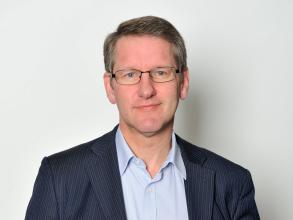
Dr Richard Swannell
Date: 22 January 2026, 16:00
Location: Oxford Martin School, seminar room 1 and online
Join us for the first seminar of the year with Dr Richard Swannell, OMS Visiting Fellow and Principal Partner, Intent to Impact LLC.
Title: Throwing away our future: Food waste in the fight against climate change
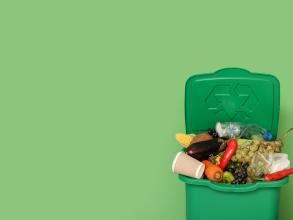
Abstract: Food loss and waste (FLW) accounts for an estimated 8-10% of global greenhouse gas emissions - nearly three times those of the aviation sector - yet remains one of the most underutilised levers in climate mitigation. In this talk, Richard examines the financial, social, and environmental imperatives for accelerating action on FLW, positioning waste reduction as a critical component of food system transformation.
Drawing on evidence from cities and countries across the world, the talk explores what works in practice to reduce FLW, scale surplus food redistribution, and embed circularity across food supply chains. It assesses the relative effectiveness of policy interventions, voluntary and regulatory approaches, fiscal measures, and citizen behaviour change, highlighting lessons learned from diverse governance contexts.
Against this backdrop, Richard reviews global progress toward UN Sustainable Development Goal 12.3, which calls for halving food waste and reducing food loss by 2030. Despite the clear climate benefits, including significant reductions in carbon dioxide and methane, a potent greenhouse gas, only around 30 countries currently address FLW in their nationally determined contributions. This omission is both surprising and concerning given that FLW reduction is often regarded as one of the 'low-hanging fruits' of climate action.
The talk concludes by arguing that minimising food loss and waste should be a core operating principle of the global food system. It outlines practical pathways to achieve this shift and suggests that, in an increasingly polarised world, tackling food waste represents a rare opportunity for collective action with substantial benefits for both present and future generations.
Dr Richard Swannell FRSA is an internationally recognised expert on resource efficiency, with particular expertise in food loss and waste and its role in addressing climate change. An environmental scientist by training, Richard has spent over two decades translating evidence into practical action across food systems, packaging, plastics pollution, recycling, and wider sustainability challenges.
Richard began his career in the UK scientific civil service and at AEA Technology plc before joining WRAP in 2004. During his 21 years at WRAP, he led major programmes that have become international exemplars of effective food system intervention. He headed the team that created and delivered the pioneering Courtauld Commitment - the first voluntary agreement of its kind between a government-backed body and UK supermarkets - driving ambitious reductions in packaging and food waste across the supply chain. He also helped develop and lead the influential Love Food Hate Waste campaign, which reshaped public engagement with food waste.
Together, these initiatives have helped reduce food loss and waste across the UK supply chain by over one million tonnes per year. Richard has since advised governments and international organisations including the FAO, World Bank, UNEP, the European Commission, and the governments of Australia, South Africa, and Mexico. He was an active member of the EU Food Loss and Waste Platform from 2016 to 2025 and has contributed to key global publications, including the Food Loss and Waste Protocol, multiple Champions 12.3 repots, and the World Bank's work on the economic and climate case for tackling food loss and waste.
Richard is now Principal Partner at the environmental consultancy Intent to Impact LLP, supporting governments and businesses to accelerate the transition to more resource-efficient and climate-aligned food systems.